Lately I’ve been getting reminded of the stories my grandmother would tell us on her front porch. Warm summer evenings, or Sundays after church, on the swing couch ubiquitous in Black Atlanta neighborhoods of the late sixties. Most of her stories were about Brer Rabbit: the crafty trickster who would beg the farmer to be thrown into the briar patch. Bruh Rabbit knew that the thorns offered a place of safety and autonomous life, while the farmer could only comprehend the thorn patch – perhaps a configuration of blackberry bushes – as sure death for the captured rabbit.
My grandmother was herself the granddaughter of enslaved people. Those ancestors included harvesters of rice along the South Carolina coast, perhaps maroons from Arkansas, perhaps maroons from plantations in Macon, GA who lived in community with the original keepers of those lands. She was not so subtle in conveying these stories as tales of marronage. At least that is how the act of imparting these stories seem fifty years later.
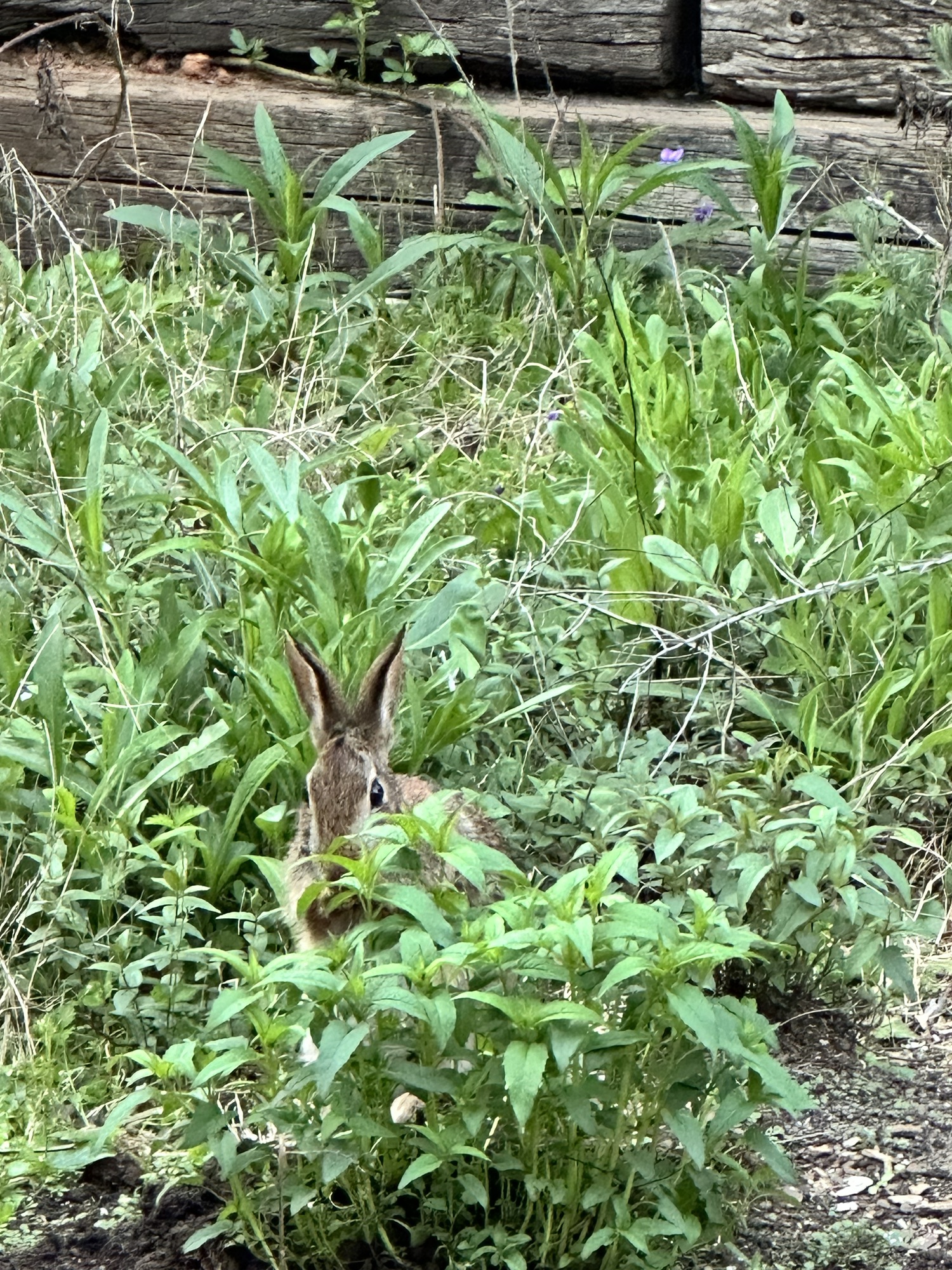
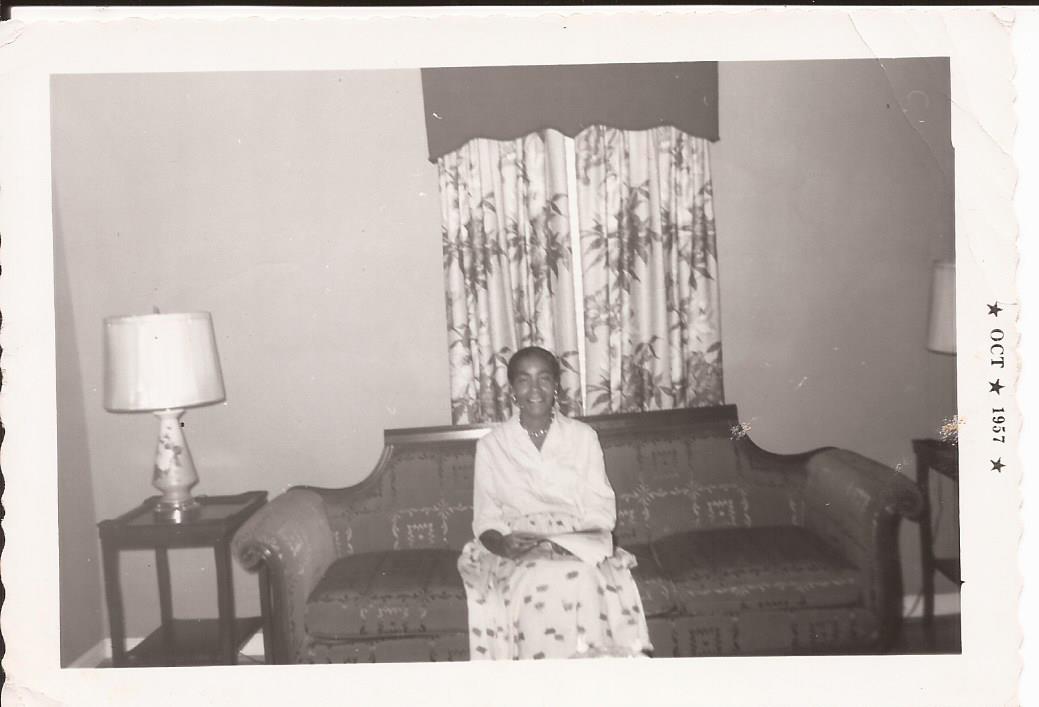
Our backyard over the past five years has become a sometimes shelter for wild rabbits that inhabit our neighborhood.
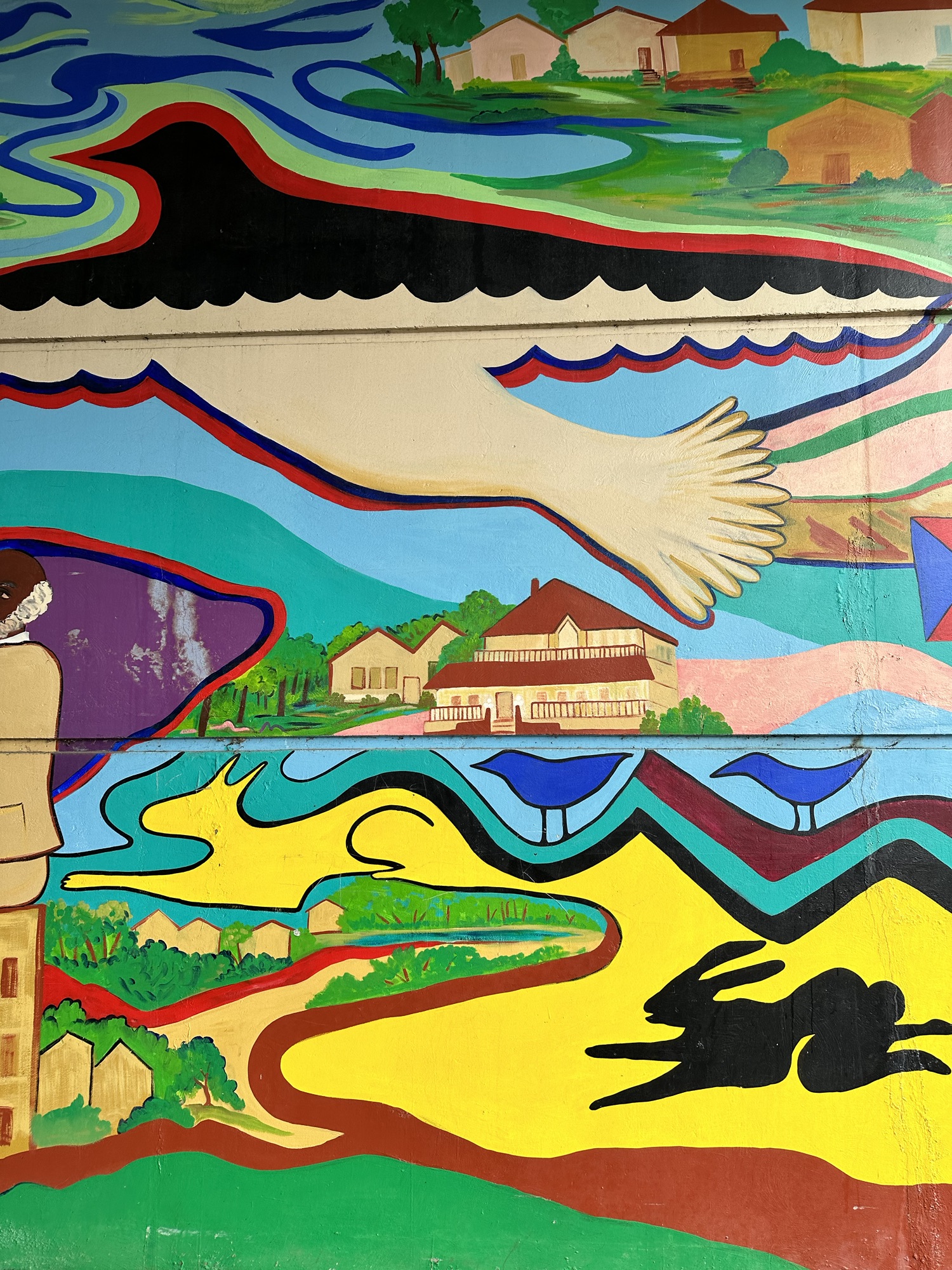
It feels as if sometimes the mural has come to life around us, a reminder that the spaces in which all species may gather in the land are always waiting to be rebirthed and reimagined.
Marronage (marronnage, maroonage, maronage) conventionally refers to a group of persons isolating themselves from a surrounding society in order to create a fully autonomous community
Freedom as Marronage, Neil Roberts
The stories of my grandmother, the murals that still encircle the places where she lived and nurtured, gardened, walked, played her piano. I perceive them as a call to a sustaining and radical maronnage. In Freedom as Marronage, Neil Roberts delves into “freedom is a process”: in the process of escape, the enslaved come to define a freedom that is beyond the binaries of “free citizen” and “slave”. Using the context of the Haitian Revolution, Roberts forces us to examine how maroon communities sustained the largest, most successful slave rebellion. Bruh Rabbit embodies freedom. Perhaps those Black working class communities that my grandmother and her peers inhabited were the essence of that marronage. I am witnessing them dissolving under the weight of Atlanta’s gentrification: the unwieldy twisting blackberry bushes of the backyard become my resistance: “Freedom is a place” (Ruth Wilson Gilmore), “Freedom is a process” (Neil Roberts).
Practice increases skill. Combined with Revolutionary Love, we grow power through mutual aid, political education, the release of the incarcerated, and community control over police. Love, vulnerability, and agency mitigate apathy, depression, and aggression; promote viaducts into structures that fuel transformative power – the powers protecting the masses, nature, and animal life forms Resisting violent inequities, liberationists and anti-racist allies, inspired by Revolutionary Love, construct small drawbridges and maroon sanctuaries to enable survival with vitality, strategies, and security.
Joy James, In Pursuit of Revolutionary Love: Precarity, Power, Communities
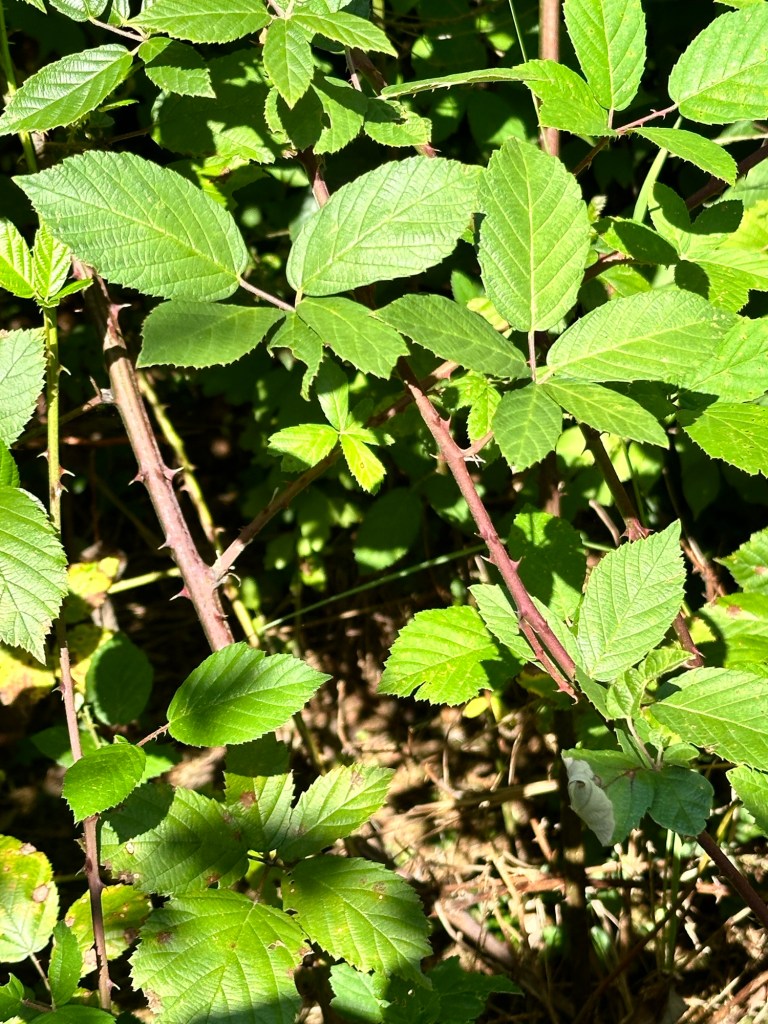
Maroon sanctuaries. I meditate on blackberry thorns and the sweet blackberries from last month. I reflect on my grandmother’s meditation on blackberries as she prepared a blackberry pie in the kitchen that overlooked a backyard of birdbaths and bird song.

 Charles write here
wow!! 52The Uhuru Three, African Stream, and the Black Scare/Red Scare