“Black culture” – or to be precise the artistic production of peoples of the African diaspora living the “united states” – continues to be used by the “united states” to further the aims of its global empire. These aims include of course the domination and incapacitation of the African diaspora residing within the united states.
We took a close look at one case a few months back at Atlanta’s Hammond’s House Museum
Hammond’s House was holding an exhibition of the work of John Rhoden. Rhoden was among the most accomplished sculptors of the 20th century. He was a Black artist who grew up in Alabama and lived much of his life in Harlem. Yet, he spent spent most of his career promoting the cultural counterinsurgency of the United States during extended time in Indonesia, Kenya, Zimbabwe, Uganda, and Tanzania.

The many inspirations that drive Rhoden’s work are apparent. In particular, influences of his time spent teaching and learning while in Indonesia are clear
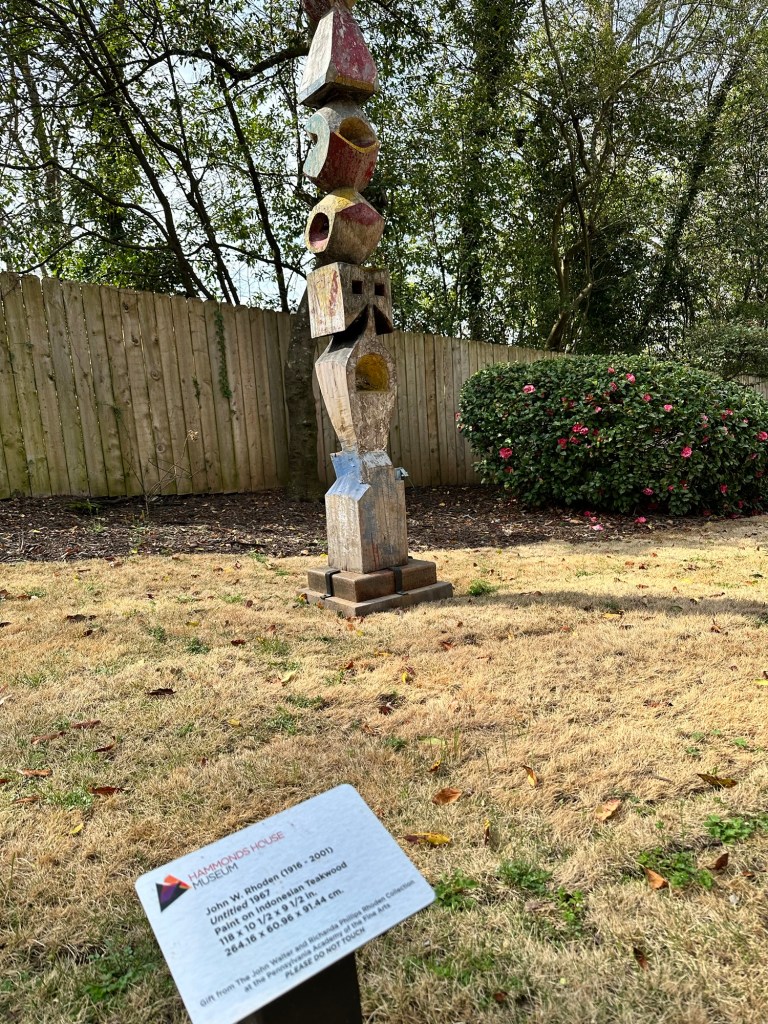
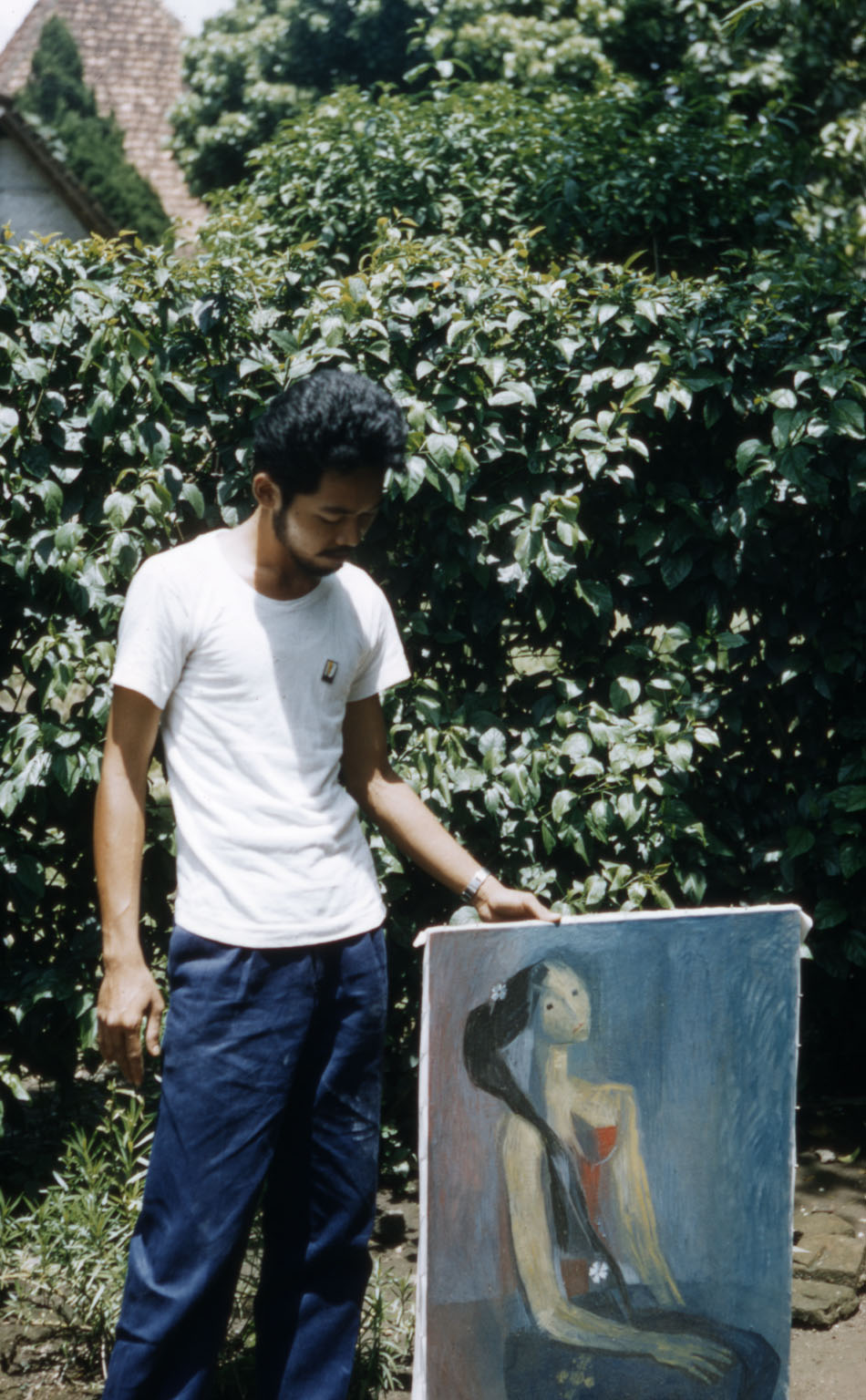
Rhoden’s stays in Indonesia were sponsored by the US State Department through what is now known as the Fulbright Program (world travel 1955 – 59) and the Rockefeller Foundation (1961 – 63). Rhoden continued his connections to Indonesia.
As I look through his papers and photographs his close collaboration with Indonesian artists is clear.
But it is also clear that Rhoden was part of a larger effort of cold-war containment and anti-communism that combined “cultural ambassador” programs with covert interventions. In the case of Indonesia, the US government combined cultural propaganda with aid and other incentives to thwart the evolution of a socialism in Indonesia. This culminated in 1965, when over one million Indonesians – many of them communists- were murdered in a US backed overthrow of the Sukarno government.
In The Jakarta Method (internet archive version, audio book version) Vincent Bivens details how multiple US administrations orchestrated the repression of Indonesia. In 1955, Indonesia hosted the Bandung Conference – The Afro-Asian Conference as a gathering of African and Asian countries that were just emerging from decades of western imperialism after long fought freedom struggles. As Bivens writes “That term Third World,” was born in 1951 in France, but it really only came into its own in 1955, in Indonesia.”
It was at this point that the US government identified Indonesia as a threat:
Within Indonesia, Sukarno had cemented himself in the minds of the people as the leader of a new kind of revolution. Francisca, absolutely inspired, would be able to recite parts of Sukarno’s opening speech at Bandung by heart long afterward.
In Washington, the attitude was very different. The response was racist condescension. State Department officials called the meeting the “Darktown Strutters Ball.”
But to Eisenhower, Wisner, and the Dulles brothers, Sukarno’s behavior was no joke. For them, by now, neutralism itself was an offense. Anyone who wasn’t actively against the Soviet Union must be against the United States, no matter how loudly he praised Paul Revere.
The documentary Soundtrack to a Coup d’Etat probes how jazz musicians Dizzy Gillespie, Lewis Armstrong, and others were dispatched to Africa (and across the Global South) in 1961 to provide distraction and cover for the overthrow and assassination of Patrice Lumumba

Congo takes center stage to both the Cold War and the scheme for control of the UN. The US State Department swings into action: Jazz ambassador Louis Armstrong is dispatched to win the hearts and minds of Africa. Unwittingly, Armstrong becomes a smokescreen to divert attention from Africa’s first post-colonial coup, leading to the assassination of Congo’s first democratically elected leader.
As I browse through the slides of Rhoden’s stay in Indonesia (which coincide with Lumumba’s assassination), I wonder which of the artists that he worked with (appropriated from?) might have perished in the genocide that was to take place in just a few short years.

The commissioning and re-commissioning of Black cultural production to uphold the aims of an empire that also destroys Black aspirations and life on a planetary is as fundamental to amerikkka as its flags or its military bases. In surfaces in the Cowboy Carter tours and superbowl performances synchronized with the bombing of families in tents.
I pray that one day, our discernment, compassion, and the revolutionary world (re)building aspirations of our ancestors will once again allow art and action and love that will break chains and fences of our captivity.

 Charles write here